
Youth grounded.
Action oriented.
Technology, especially AI, is changing how young people connect. Our research tracks those shifts as they happen, building an evolving picture of what connection looks like today and where it might be heading.
Our goal? To surface insights that help young people, and the adults who support them, build a future that puts connection first.
Subscribe to our Substack to be the first to see new research. It's also where we think out loud about the questions we're still working through, and we'd love to hear yours.
LATEST RESEARCH
Can you feel the pull?
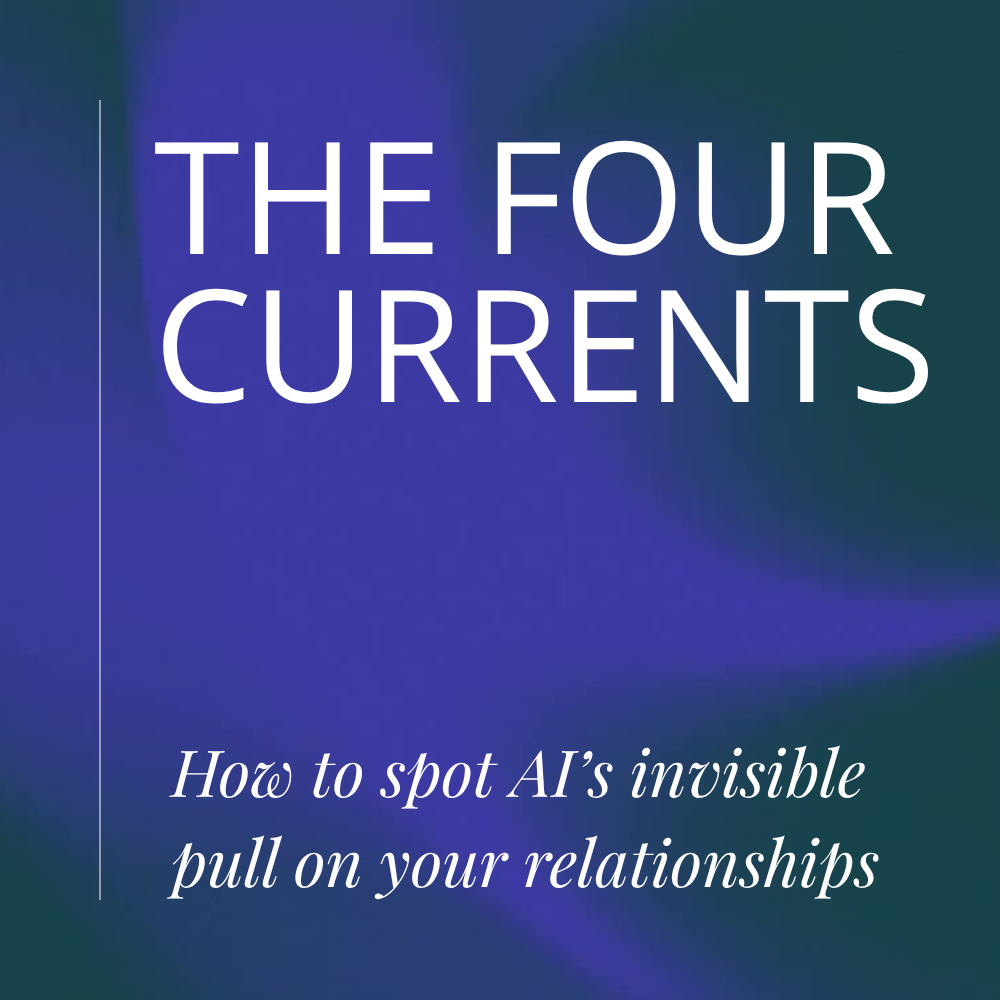
Young people tell us they're often surprised by the role AI has come to play in their relational worlds. It didn't happen abruptly. They waded in, and like swimmers in an ocean current, were gradually pulled along.
The Four Currents is a free, interactive site that makes those invisible forces visible. It names the four big ways AI is reshaping how we trust, care for, and connect with each other, and it invites you to see and feel them for yourself through demos and the voices of young people swimming in these new waters.
Additional Publications
JUNE 21, 2026
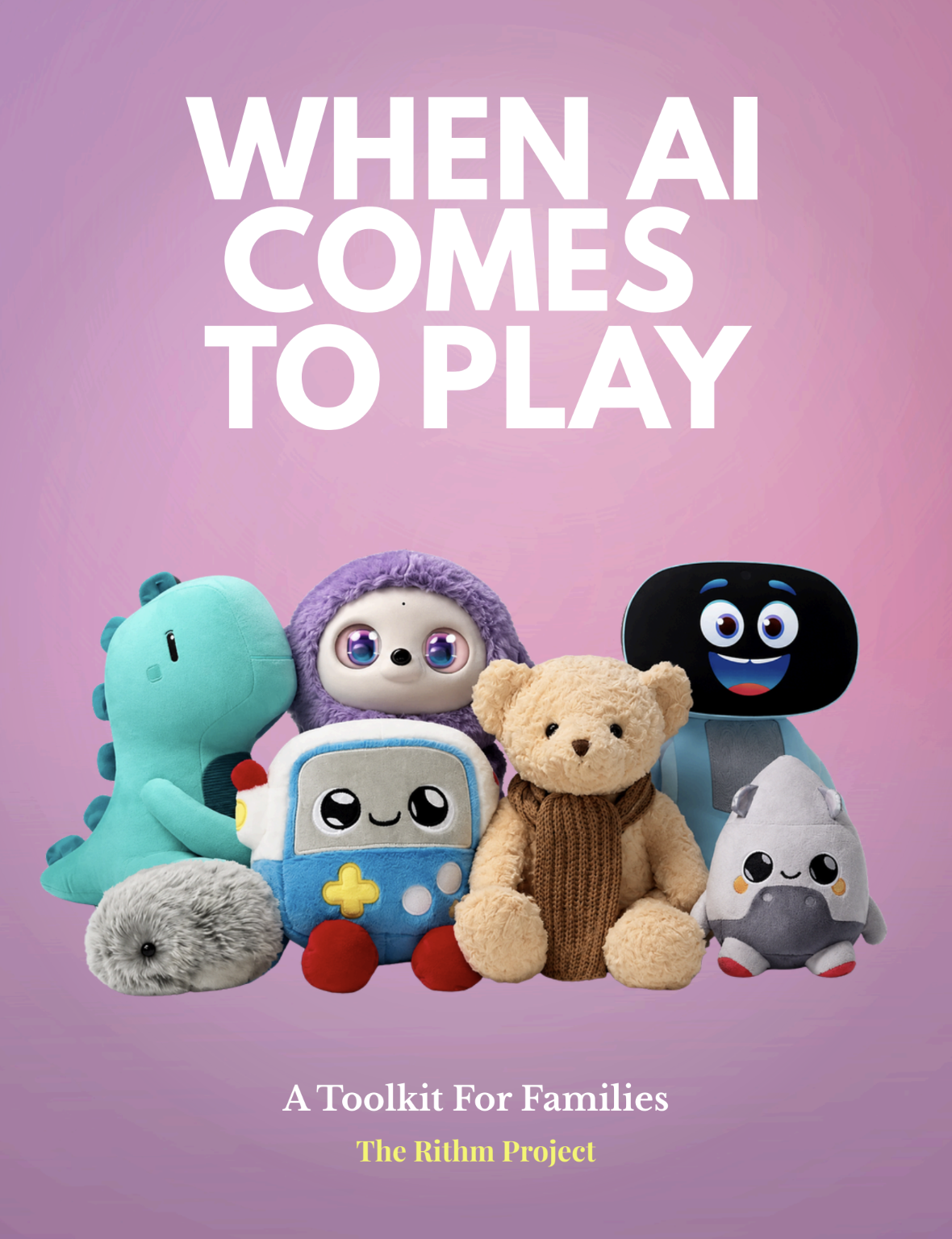
5 design features that pull kids away from real relationships
In the lead-up to Toy Story 5, we applied our Pro-Social Principles for AI to a category most families are about to encounter for the first time: AI toys. They are rapidly hitting the shelves and kids' wishlists. From Mattel's partnership with OpenAI to more than 1,500 AI toy companies in China, the wave is already here.
What you'll find here is a family guide — five design features in AI toys that are most likely to pull kids away from real relationships and healthy development, plus the behavioral tells to watch for in your child once one is home. Built not as a prescription but as a way to sharpen our lens for navigating this new chapter.

APRIL 21, 2026
What's actually happening when young people use AI?
One of the first large-scale studies to explore how young people’s AI use intersects with their social lives, emotional wellbeing, and the relationships around them.
Surveying 2,400 people ages 13–24, we asked not whether AI is good or bad — but what’s actually happening, for whom, why. What we heard back was a story that was much more nuanced, human, and insightful than the dominant narrative about this generation and this emerging technology.

APRIL 21, 2026
The biggest open questions are relational & developmental
Through conversations with 37 researchers, technologists, clinicians, and young people, we surfaced a striking consensus: the most pressing questions about AI and youth are not technological — they are relational and developmental.
The field doesn't yet have answers to the questions that matter most, and shifts are happening faster than research can track. This landscape scan makes the case for coordinated investment in shared metrics, cross-disciplinary networks, and research infrastructure to understand what AI is doing to the foundations of young people's development.

JULY 31, 2025
What does AI look like when it strengthens real-world connection?
We interviewed 30 young people ages 14–18 and scanned AI tools, from mainstream products to social-impact and clinical apps. A clear pattern emerged: some AI strengthens real-world connection, while other tools quietly displace it.
That pattern became our five Prosocial Principles, a framework for designing and evaluating AI that supports human relationships. Partners use them to audit tools, guide product design, and make intentional choices about AI in young people's lives.

APRIL 2, 2025
“Why am I talking to a TV show character about the nature of life?”
This piece draws on original interviews with 27 teens ages 14–18 to examine how young people are actually engaging with AI companion apps — from venting to chatbots as a judgment-free outlet, to experimenting with AI friendships and romance.
Using the lens of "Vitamin or Vicodin," the piece explores both the genuine benefits these tools offer and the risks of dependency and social isolation, while centering what young people themselves wish adults understood about their relationship with AI.

JUNE 28, 2024
Will AI strengthen or erode human-to-human relationships?
This framework explores how the rise of AI companions and tools may impact young people's capacity for genuine human connection amid growing loneliness and mental health crises.
The piece introduces a four-quadrant framework mapping possible futures based on how youth engage with chatbots — and makes the case for intentionally designing and investing in pro-social AI that strengthens, rather than replaces, our most human ability to connect.

Be the first
to see it
Our Substack is where we think out loud. Subscribe for early looks at new research, the questions we haven't answered yet, and practical ideas you can bring to your classroom, home, and community.